Last year, in July, the United States and Israel bombarded Iran’s nuclear energy and nuclear research facilities over 12 days. After a few days, the two belligerent powers – who had no United Nations authorisation for this war of aggression – opened the door for a ceasefire. At that time, believing that this might very well be the basis for a full negotiation, the Iranian government led by Supreme Leader Ali Hosseini Khamenei agreed to the terms set out – an immediate end to the strikes and no escalation. The missile launchers went quiet, but the deal was very fragile.
Within weeks of each other, India’s legislature and its highest court delivered two verdicts on the same question: who owns your body? The answer, in both cases, was the same. There are moments in a nation’s legislative history when one can almost hear the grinding of gears in reverse. The Transgender Persons (Protection of Rights) Amendment Bill, 2026 is precisely such a moment. And on March 13, 2026, the Supreme Court of India dismissed a plea for paid menstrual leave. Taken together, these are not two separate events requiring two separate analyses.
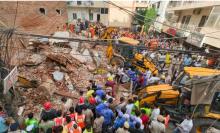
In the recent period, a series of workplace accidents have occurred across Haryana, resulting in dozens of fatalities. This is a direct fall out of the indifference of the BJP government and its failure to ensure the safety of the workers, leaving them to fend for themselves in life-threatening working conditions.
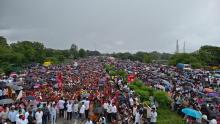
The CITU organised a march to the Tripura Assembly on March 23 to push for various demands: Regularise all categories of irregular employees; clear the pending DA/DR arrears; reinstate all retrenched workers, including scheme workers; and the anti-worker Labour Codes must not be implemented in this state. Hundreds of working people who joined the march warned the government: “We will not surrender. This struggle is not over.
Jan Akrosh Jatha Mobilizes Apple Farmers Across Jammu and Kashmir
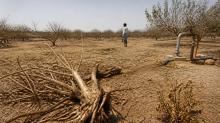
The Communist Party of India (Marxist) Jammu and Kashmir conducted its ‘Jan Akrosh Jatha’ from March 9 to March 24, 2026, simultaneously launching the campaign across the Kashmir and Jammu divisions to mobilize public opinion against what it termed the “anti-people” policies of the Central government. The campaign culminated in a major rally in New Delhi on March 24.
ON February 28, 2026, the United States and Israel launched Operation Epic Fury, striking 1,000 targets in Iran within the first 24 hours. By mid-March, the number had crossed 6,000. Behind this staggering pace of destruction lay not just the familiar arsenal of Tomahawk missiles, B-2 stealth bombers and carrier-based fighters, but a new weapon in the imperial toolkit: artificial intelligence.
Most Asian currencies have fallen significantly against the US dollar since the start of the US-Israeli war against Iran. Of these however the Indian rupee has been perhaps the worst performer, having fallen to as low as Rs. 93.73 by Friday March 20, from Rs. 91.01 on February 27 the day before the war started.
All across the world, a million-dollar question is being asked: what will be the final outcome of the war of aggression the US and Israel jointly initiated with the elimination of Ayatollah Ali Khamenei on February 28? Subsequently, there were ferocious attacks on Iran’s facilities, both military and civilian. As late as March 21, Donald Trump had issued a unilateral threat to Iran, through his most favoured line of communication.
On April 8, 1929, Bhagat Singh and Batukeshwar Dutt threw two bombs into the chamber of the Central Legislative Assembly in the Council House (Old Parliament House) in Delhi as the Viceroy, Lord Irwin’s proclamation enacting the Public Safety Bill and the Trade Disputes Bill was to be made, despite the fact that the majority of members had rejected the two bills.