Jai Bhagwan
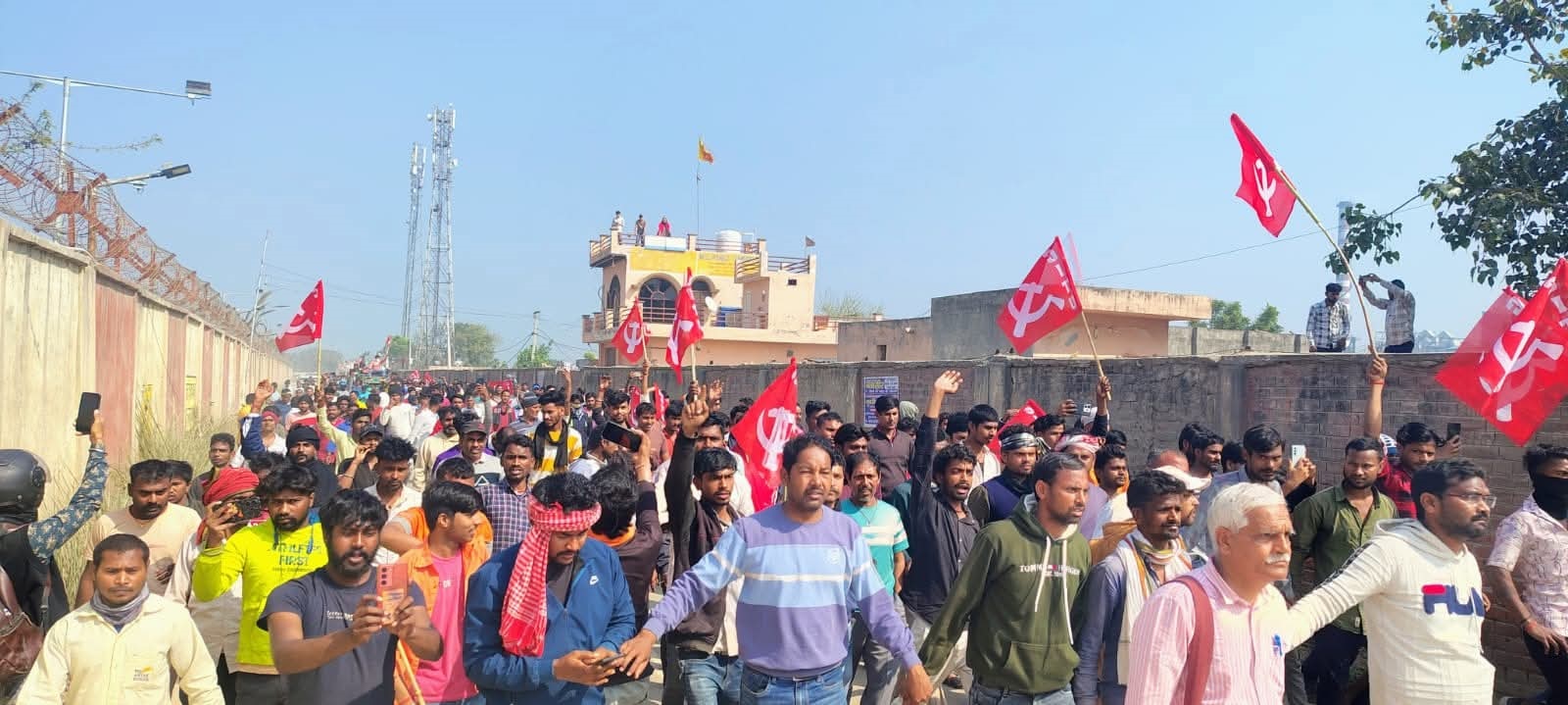
THE way 30,000 contract workers at the Panipat Refinery of Indian Oil Corporation Ltd (IOCL) expressed their anger on February 23, is proof that when oppression reaches its peak, rebellion is inevitable.
Contract workers perform most of the work at the Panipat Refinery, from production and maintenance to the construction of new projects/ buildings. While the number of employees on IOCL's payroll is barely 1,000, the number of contract workers in its expansion project is close to 30,000, making this refinery the largest in the country. Alongside the refinery, several other plants have been developed, producing raw materials for everything from packaging and plastics to the textile industry. A large number of contract labourers are employed here.
The Panipat Refinery is being expanded. Several major companies have been awarded contracts for various tasks. The largest company is L&T, which employs 7,520 contract workers. Others include Afsure, KKS, Toya and Paramount. A multi-layered chain of contractors recruits and brings in the workers, taking commission from the workers' wages.
WHY DID THE AGITATION SUDDENLY ERUPT?
On February 21, three workers were seriously injured in an accident inside the plant. Management and the contractor did not even provide ambulances to transport the workers to the hospital. This incident ignited the pent-up anger of workers who had endured years of oppression, exploitation and humiliation. A strike began on the morning of February 23, rousing the IOCL management and major contractors like L&T from their slumber. The workers' anger was so intense that CISF staff was forced to retreat. Except for isolated incidents, the workers expressed their resistance in a very peaceful manner.
CONDITIONS OF CONTRACT WORKERS
The underlying cause of this rebellion is the years of exploitation of the workers. Most of the workers are forced to work 12-16 hours per day. Overtime paid is never at double rate. Wages are paid after two or three months. Only two days off are given per month, with no other holidays. Management and contractors engage in massive fraud in depositing PF in their accounts. Most workers never receive their PF payments. The plant lacks basic amenities like drinking water and toilets. There are no restrooms. There is no safety for life. Rooms have been built by private owners for these workers on three sides of the refinery. 6-7 workers are forced to live together in each matchbox like room. Coercion, abuse, and humiliation from contractors and their hired bouncers are a daily occurrence. Getting a gate pass issued/cancelled, or even getting it made permanent, requires 15 days of hassle. Hefty bribes are exacted for this as well. Commissions are even charged for medical checkups. All these circumstances created the environment for this rebellion. The publicity surrounding the nationwide strikes of July 9, and more recently, February 12, certainly played a role too.
The workers building the refinery's new plant are considered construction workers but many of them are experienced technical workers having previously worked in other refineries and similar construction projects. The workers were demanding an eight-hour workday, double overtime payment, regular wages, timely payment of PF, and an end to the ongoing bribery regarding gate passes and other issues. They also demanded statutory basic amenities like toilets, drinking water and canteens at the workplace.
CITU'S INTERVENTION
CITU leadership visited the workers the very next day, February 24, and held a meeting with them. A memorandum was submitted to the management along with two other trade unions. Following this, a series of daily demonstrations continued. On February 26, CITU, along with eight worker representatives, participated in negotiations. Discussions focused on 17 points, including those mentioned above, all of which were included in an earlier agreement. However, the agreement could not be signed as the demand for a wage increase was not met. The workers demanded that they be paid the minimum wage for Category A cities as declared by the central government which is Rs. 20,358 for unskilled, Rs. 22,568 for semi-skilled, Rs. 24,804 for skilled and Rs. 26,910 for highly skilled. Negotiations broke down on this. CITU leaders visited the workers in their settlements for three consecutive days and addressed them. After the demonstration on February 28, the administration selected five representatives from among the workers, included them in the negotiations and announced that an agreement had been reached. But the truth is that the management has once again betrayed the workers.
GOVERNMENT AND CONTRACTORS COLLUSION
Instead of meeting demands through negotiations, management and contractors attempted to crush the movement. Managers, contractors, housing colony owners and the police resorted to intimidation, threatening workers to report for duty or vacate the rooms. Nameless FIRs were filed against 2,500 workers. On February 28, two comrades and three workers who supported the movement were arrested. Because a large section of the protesting workers were migrants, this had a significant impact on them. CITU called for demonstrations against this on March 2, at district headquarters across the state. These actions took place in all districts, with CITU, along with activists from the Sarva Karamchari Sangh, Kisan Sabha, Retired Employees Union, Khet Mazdoor Union, and Janwadi Mahila Samiti participating.
WHAT'S NEXT?
A memorandum of demands was sent to the Central Government and the Haryana Government demanding:
1. All legal demands of the agitating contract workers at the Panipat Refinery, including a wage increase, be resolved in a respectful manner and a tripartite agreement be reached.
2. The 8-hour workday should be strictly adhered to. Double rate should be paid for overtime.
3. Wages should be paid directly to workers' accounts before the 7th of each month.
4. All labour laws, including PF and ESI, should be strictly enforced, and action should be taken against contractors who violate them.
5. All facilities, including a canteen, toilets and restrooms, should be provided at the work site.
6. The FIR registered against the workers should be immediately cancelled.
7. The workers and those arrested in their support should be immediately released.
Most workers have gone home for the festival season. They remain angry but are also fearful of the administration, contractors and bouncers. Some have even returned to work under pressure. But this anger will surface again one day.


