After a gap of 2½ years, we now have certain sections of the Digital Personal Data Protection (DPDP) Act, backed by the Rules, ready for immediate implementation. While the state’s powers to surveil citizens come into effect immediately, the sections that protect citizens' privacy against big data companies and the state (or correct/delete incorrect data) have to wait another 18 months. Some data protection indeed!
The United States had no problem with Venezuela per se, not with the country nor with its former oligarchy. The problem that the US government and its corporate class have is with the process set in motion by the first government of President Hugo Chávez.
As does every year, 2025 also taught us some unforgettable lessons, posed some uncomfortable questions and gave us some memories to cherish. We lived through the war and the protests to stop the war; we saw attempts to sabotage hard-won rights and also resistance against such attempts. People made their choices that made us sit, think, analyse and learn lessons. Overall, it is yet another year that marched into history, pushing us to search for a better future.
Kerala Chief Minister Pinarayi Vijayan inaugurated the conclave. Addressing the conclave, he said that under the guise of simplifying the country’s labour laws, the central government has consolidated 29 labour laws into four labour codes. These are the codes on wages, industrial relations, social security, and occupational safety. There is currently a widespread concern among the general public that the implementation of these codes will adversely affect the rights of workers.
The Kerala government organised the National Labour Conclave in Thiruvananthapuram on December 19 to formulate an alternative policy that protects the rights of the state and its workers from the four labour codes implemented by the Centre. The conclave decided to constitute a three-member expert committee to study the labour codes, understand their implications for workers in Kerala, and suggest remedial measures. Justice (retired) Gopala Gowda, Shyam Sundar and Varkiachan Pettah will be part of the committee, besides two research scholars.
Around 600 participants from 23 states gathered in Delhi on 11–12 December for the National Convention on Health Rights, organised by Jan Swasthya Abhiyan (JSA). The convention commemorated 25 years of JSA’s sustained engagement with health policy, public health systems, and the defence of people’s health rights. JSA is a national platform comprising 22 networks and several hundred organisations and groups working across India.
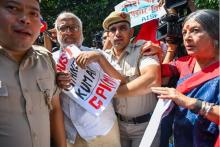
THE sensational developments over the last week brought the question of crimes against women to the forefront with a dramatic effect. The exceptional case of the Unnao rape victim, a mere 15-year-old who was lured by Kuldeep Singh Sengar, the local MLA of Unnao, has burst into public discourse. The air was thick with disbelief over the Delhi High Court's decision to suspend the life sentence of the convicted Sengar in the 2017 rape case and grant him bail. Naturally, this obnoxious development set off waves of outrage nationally.
The Supreme Court (SC) has put in abeyance its own decision on the Aravalli range of November 20, 2025, in the wake of widespread anger expressed by farmers, women, rural labourers, tribals, environmentalist groups and other concerned citizens. Fire of contention in this case arose from the Supreme Court’s acceptance of a new definition submitted by the Ministry of Forest and Environment according to which, hills less than 100 metres from the relief will not qualify to be hills and thereby lose protection from the mining.
Amid continued Opposition protests over the passage of the VB-G RAM G Bill to replace the Mahatma Gandhi National Rural Employment Guarantee Act (MGNREGA), both Houses of Parliament were adjourned sine die. The Winter Session of Parliament concluded on Friday after 19 days. Taking part in the debate on the VB-G RAM G Bill in the Rajya Sabha, Bikash Ranjan Bhattacharyya described the Bill as unconstitutional. While speaking on the Bill, it reminds me of a poem by Sukumar Ray.