Eshan Sharma
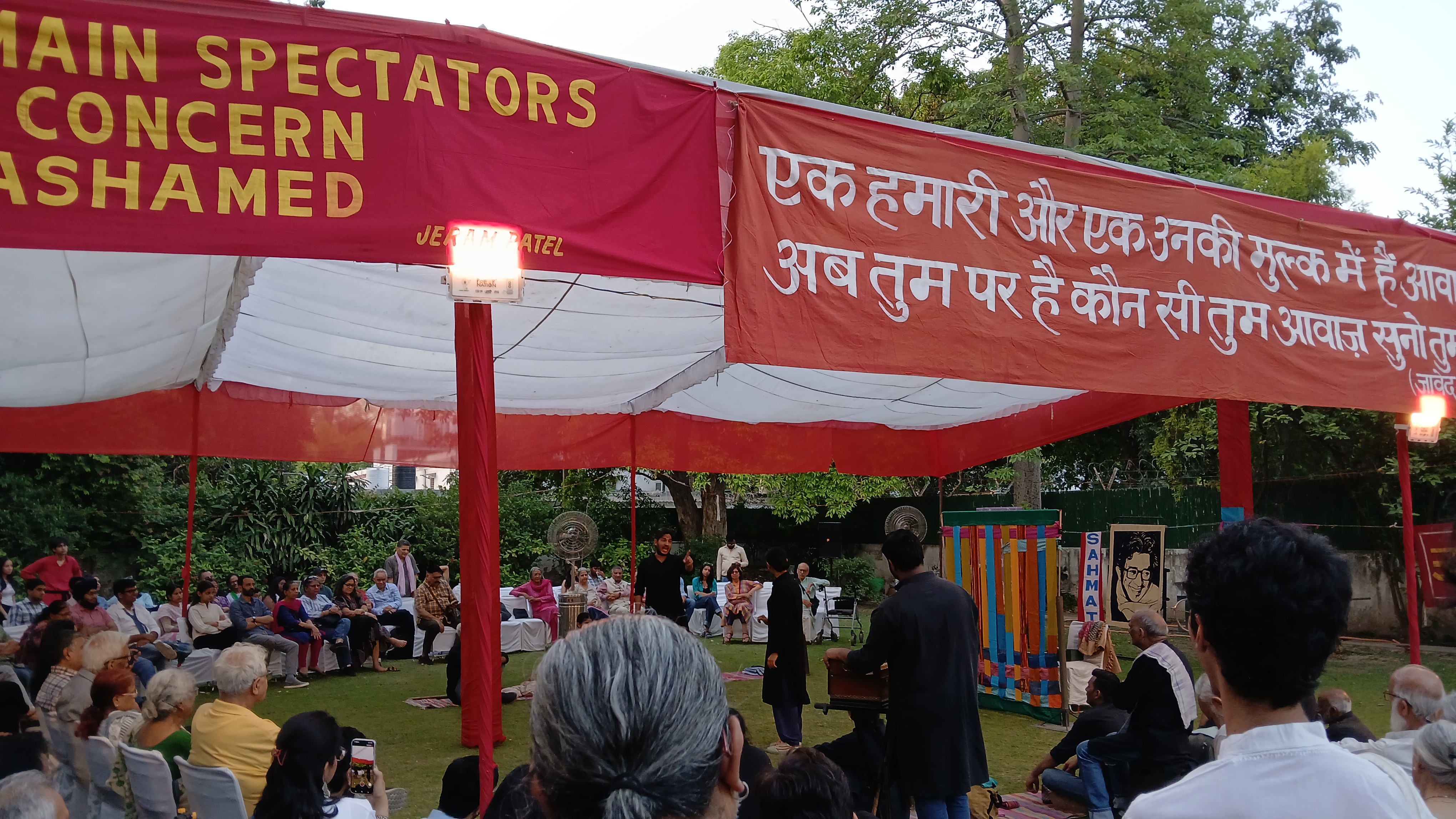
On April 12, 2026, theatre practitioners, students and cultural activists across Delhi gathered to mark the 38th National Street Theatre Day, commemorating the legacy of Safdar Hashmi, activist, writer, poet and a pioneer of street theatre in India. Instituted in 1989 during the first Safdar Samaroh, the day has evolved into a powerful assertion of the role of culture in democratic life and public resistance.
Safdar Hashmi’s life and work remain inseparable from the history of progressive cultural movements in India. As a founding member of Jan Natya Manch (JANAM), he transformed street theatre into a sharp political medium rooted in working class struggles and questions of justice. His tragic death following a brutal attack on January 1, 1989, in Jhandapur, Sahibabad, while performing Halla Bol, remains a defining moment in India’s cultural history. He succumbed to his injuries the following day, but his ideas and commitment continue to inspire.
In times marked by increasing censorship and its weaponization, Safdar’s relevance is felt more than ever. He stood for reason, courage and an uncompromising commitment to democratic values. National Street Theatre Day is thus not merely commemorative; it is a reaffirmation of resistance. Across Delhi and in cities throughout India, theatre groups gather in public spaces to remember that voice which refused to be silenced.
This year’s programme, organized by Safdar Hashmi Memorial Trust at its office, brought together five college theatre groups along with JANAM. The evening opened with Zakir Husain College’s Aman Theatre Society performing Paradose, which examined the opacity of the healthcare system and foregrounded issues of patient rights and informed consent. Aflatoon from Vivekananda Institute of Professional Studies staged Profanity Allowed Hai, interrogating patriarchy as a deeply embedded social structure shaping everyday life. Miranda House’s Anukriti followed with Rang Darungi, a powerful intervention on marital rape that challenged the silence surrounding violence within marriage. JANAM’s Saanjhi Re Chadariya, written by Brijesh and Komita and Atman, foregrounded friendship and solidarity as responses to hate, echoing Safdar’s commitment to secular and collective values. The Theatre and Film Society of Rajdhani College, Tryambakam, presented Dhundla Jaal, examining the spread of misinformation and its consequences, drawing from events such as the killing of journalist Gauri Lankesh and the Muzaffarnagar riots. The final performance, Nazarband by SGTB Khalsa College’s Ankur, explored the expanding culture of surveillance and its implications for privacy, dissent and intellectual freedom.
The programme was anchored by M K Raina, well known actor and director and Sohail Hashmi, both closely associated with Safdar’s life and work. The venue was filled to capacity, with young people travelling from across the city, an encouraging sign in times often marked by political disengagement. All the performances reflected a rare political awareness. In remembering Safdar, they did not merely pay tribute, they carried forward his method and conviction. National Street Theatre Day thus remains a living space of resistance, where culture continues to speak truth to power and where the struggle for justice, equality and democracy carries on.


