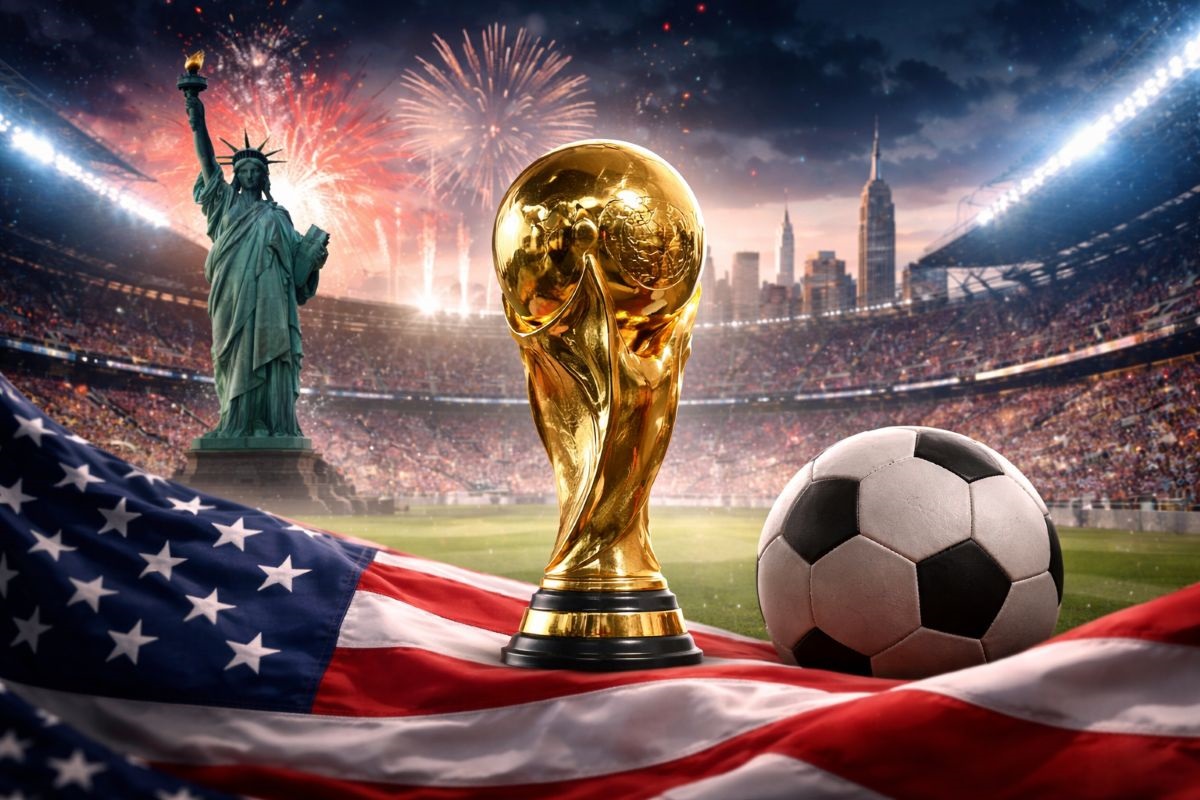
Sun and Shadows over the 2026 World Cup: The Corporate Conquest of Football
Arka Rajpandit
THE New York-New Jersey Stadium shone brightly in East Rutherford as a roaring crowd welcomed Argentina and Spain for the 2026 World Cup Final. On the pitch, the match was pure drama. A 39-year-old Lionel Messi pushed through his final World Cup game, searching for one last spark of brilliance. Meanwhile, Spain's 19-year-old star Lamine Yamal amazed fans with fast, brilliant footwork, passing the torch from an old legend to a new generation.
The contest had reached a fever pitch across 120 grinding minutes. Emiliano Martinez made 12 stunning saves to keep Argentina alive, especially after a late red card for Enzo Fernandez forced them to defend with just 10 men. But the deadlock had broken in the 106th minute of extra time when substitute Ferran Torres had fired home to crown Spain as World Cup champions in a 1–0 triumph. As the whistle had blown, Messi had been left in tears, denying La Albiceleste back-to-back titles.
Yet, panning up from the tearful pitch to the soundproofed luxury skyboxes, behind the triple-glazed glass, billionaires, private equity partners, and sovereign wealth executives had sipped vintage champagne in seats that had cost upwards of $10,000. Meanwhile, outside the gates and in the living rooms of Buenos Aires, Madrid, and working class neighborhoods worldwide, the lifelong fans who had given football its beating heart had been forced to watch through a screen. Many who had saved for years had not been able to afford group stage admission, let alone this final.
The match on the pitch had remained art, but the architecture surrounding it had mutated into a cold corporate money machine. Football’s ultimate spectacle had proved that while the game had still belonged to titans like Messi and Yamal on the grass, the sport’s profit machinery had been leaving the working class fan behind.
HOW SOVEREIGN WEALTH AND WALL STREET CAPTURED FOOTBALL
The landscape of modern club ownership is defined by massive influxes of borderless institutional capital, completely altering the traditional civic models of football clubs. State-backed sovereign wealth funds view elite football as the ultimate branding vehicle and a powerful instrument for international soft power diplomacy. High-profile takeovers - such as Saudi Arabia’s Public Investment Fund (PIF) acquiring Newcastle United, Qatar Sports Investments (QSI) transforming Paris Saint-Germain (PSG) into an 837-million-euro revenue powerhouse, and Abu Dhabi’s United Group anchoring City Football Group, which owns Manchester City among other clubs -- demonstrate that financial capacity is no longer bound by a club's local economy. For these state owners, seasonal balance sheets are secondary to international exposure on a stage where cumulative revenues for the top 20 Money League clubs have soared to a record 12.4 billion euro.
Simultaneously, private equity firms and Wall Street syndicates view football as a heavily under-monetised media ecosystem ripe for aggressive yield optimisation. Private equity giants including Clearlake Capital at Chelsea FC, Oaktree Capital controlling Inter Milan, RedBird Capital steering AC Milan, Ares Management holding a major stake in Atletico Madrid, and Silver Lake backing City Football Group, have shifted the operational paradigm toward ruthless asset management. This capital influx has fueled the rapid rise of Multi-Club Ownership models, where a single corporate entity buys a web of clubs across different continents. Instead of operating as standalone community institutions, these legacy teams are streamlined into borderless corporate syndicates where player talent is shifted across global networks like digital inventory to balance corporate books.
FIFA WORLD CUP 2026: THE CORPORATE OVERHAUL
The 2026 FIFA World Cup, spanning the United States, Mexico, and Canada, stands as the ultimate realisation of an ultra-commercialised sporting paradigm. FIFA expanded the tournament to 48 teams and 104 matches, driving cycle revenues to an unprecedented record of $13 billion to $15 billion, smashing its original projections of $11 billion and nearly doubling the $7.5 billion brought in by the 2022 tournament in Qatar. Beyond the foundational broadcasting rights worth over $3.9 billion and corporate sponsorships surpassing $2.8 billion from global giants like Adidas, Coca-Cola, and Aramco, the financial strategy behind the tournament heavily prioritised high net worth consumers over everyday fans, creating unprecedented barriers to entry.
This corporate overhaul hit most sharply in the staggering cost of official matchday hospitality. Exclusive corporate providers bundled luxury suites and high-end dining into venue series tier packages that reached staggering figures up to $73,200 per person. Even the absolute lowest baseline per-game hospitality packages sat near $2,000, representing a massive 110% price jump over similar entry-level tiers at Qatar 2022. Hospitality and ticketing together generated around $3 billion, turning access to live games into an asset class designed for corporate entertainment ledgers rather than local communities.
For regular supporters seeking standard seats, FIFA introduced algorithmic dynamic pricing into the primary ticket market for the first time. Similar to airline and hotel platforms, prices fluctuated in real-time based on fan demand, scarcity, and emotional urgency. Standard Category 1 group-stage seats scaled between $450 and $990, while high-demand knockout fixtures like England vs Mexico surged to astronomical heights. To put that into perspective, comparable baseline Category 1 seats were priced at $220 in Qatar, marking a baseline price surge that immediately priced average working-class families out of the market.
The profiteering reached its absolute peak in the secondary market and final rounds. Category 1 face-value tickets for the Final at New York-New Jersey Stadium peaked at $6,730, while unregulated secondary resale markets saw prices rocket into the $10,000 to $40,000 range per ticket. Far from curbing scalping, FIFA monetised it by operating its official Resale Marketplace, taking a double-dipping 15% transaction fee from both the buyer and the seller, effectively capturing a 30% cut on every inflated secondary sale.
Even if a dedicated supporter managed to secure a ticket, ancillary matchday inflation added a crushing final penalty. Dynamic stadium parking rates routinely scaled up to $300 per matchday in major metropolitan hubs, while local transit lines, such as the rail connection from Manhattan out to MetLife Stadium, saw matchday surges up to $98 compared to normal $13 fares. In addition, strict digital restrictions placed on traditional ticket sharing prevented families from simply passing down unused physical tickets. Supporters were instead forced to navigate heavily taxed official mobile apps, completing the transformation of the World Cup ticket from a symbol of sporting passion into a financial instrument optimised for platform extraction.
THE ERASURE OF FOOTBALL’S CORE CULTURE
When a sport's primary financial objective is maximising private equity yield and expanding global broadcast footprints, its authentic local culture is often the first thing to be compromised. The working class fan base, the very group that engineered the historic anthems, painted the massive stadium banners, and built the emotional legacy of these clubs, is systematically being priced out.
In their place, modern stadiums are increasingly filled with passive corporate spectators, high spending sports tourists, and consumers who treat the matchday as a content generation exercise for social media. The classic, raucous atmosphere is gradually replaced by a quiet, predictable stadium dynamic designed specifically for television broadcast suitability.
Football was born as an everyday outlet for the working class, but it has been aggressively captured by the corporate elite. As the final whistle blows on the pitch of the 2026 World Cup, the stadium scoreboard will name the sporting champion, but the Wall-street boardrooms have long since decided who truly owns the game.


