The Hyper-Imperialism of the United States Bloc: Venezuela, Cuba, Iran
Vijay Prashad
WHEN the new year began, no-one anticipated that events would begin to move at a supersonic speed. Before the world’s billions can digest one issue – the kidnapping of the President of Venezuela – the United States and its allies moved on rapidly to another – the suffocation of the Cuban Revolution, and then the bombing of Iran. Each issue required information and thought, deep consideration of the complexity of each of these actions of the US and its hyper-imperialist bloc. Eyes moved from the Americas to Asia, and then back again to the Americas, as US President Donald Trump thumped his fist on the table, sending his deadly weapons to disrupt sovereign processes of different countries and to impose the will of the US and its allies onto them. President Nicolás Maduro of Venezuela sits in a prison in New York, while Iran’s Supreme Leader Ali Hosseini Khamenei has been blown to bits. Initially bewildered, the people of Venezuela try to continue their own journey, while Iran remains in a dangerous war, as Cuba struggles to defend its Revolution.
VENEZUELA AND CUBA
The Trump bloc advertised its assault on Venezuela, and then Cuba, in its National Security Strategy, where it revived the 1823 Monroe Doctrine with a Trump Corollary. This revival meant simply that the US has reaffirmed its claim to the entire Western Hemisphere, and now by any means. Trump’s threats to Greenland (a colony of Denmark) and Canada provoked annoyance within Europe, which could not tolerate any encroachment on its territory. On the other hand, the actuality of the Trump agenda was to expand the growth of the Angry Tide in Latin America through elections and to weaken the socialist process by a direct assault on Venezuela and by the greater suffocation of the Cuban Revolution. This is precisely what the attack of January 3 was about – to throttle the leadership of the Bolivarian process by kidnapping the president, by threatening to turn Caracas into Gaza City, and by allowing some opening to the sanctions if Venezuela would stop providing oil to Cuba. The attack on Venezuela’s Bolivarian process and the Cuban Revolution is not only on these countries (Venezuela and Cuba) but on the entire potential of socialist forces across the world – for whom Cuba remains an inspiration and for whom both Cuba and Venezuela provide a location for international organisation.
The attacks on Venezuela and Cuba are not about democracy or human rights but entirely focused on shifting the class struggle to the advantage of capitalist firms of the Global North and of the old oligarchic classes of the Western hemisphere. If both the Bolivarian process and the Cuban Revolution are defeated then capitalist permanence can be cemented, namely the view that capitalism is the last system for humanity and nothing can come beyond it that solves the problems that grip the world in our time. The Angry Tide that rises in Latin America – which has been able to build electoral majorities through different methods – is wracked by its own contradictions but is broadly an accomplice of US-led hyper-imperialism and therefore supports the assault on both Venezuela and Cuba.
Certainly, a flood of people around the world erupted with fury at the attack on these socialist processes, but this eruption did not consolidate sufficiently. Confusion was immediately sowed amongst those who had sympathy for these processes, with most of that focused on the puzzlement at the ability of the US to strike Venezuela with such precision and to squeeze Cuba so ferociously. Differences of opinion in the Left about the defence of these processes increased rather than decreased despite the outrage of the US hyper-imperialist attack on these two countries.
IRAN AND WEST ASIA
As political forces of the left began to organise tangible solidarity with Cuba, which suffered an economic setback even more harsh than that of the Special Period (1991-2000), the Trump regime shifted focus to West Asia. The USS Gerald Ford, which had been vital in the attack on Venezuela, sailed across the Atlantic Ocean to position itself to assist in the Israeli-led attack on Iran. The Islamic Republic in Iran has a political orientation very different from the Cuban Revolution or the government of the socialist party in Venezuela, but what it shares with these countries is the insistence on the sovereignty of this country against hyper-imperialist attack. Iran had committed itself to negotiations with the US through Oman, and the Iranian government – despite the falseness of the accusations against it – agreed to concessions that it did not need to make under the International Atomic Energy Agency procedures. But those concessions were shunted by the US, which was treating the negotiations as a fig leaf; the real purpose was not Iran’s nuclear programme, but regime change in Tehran.
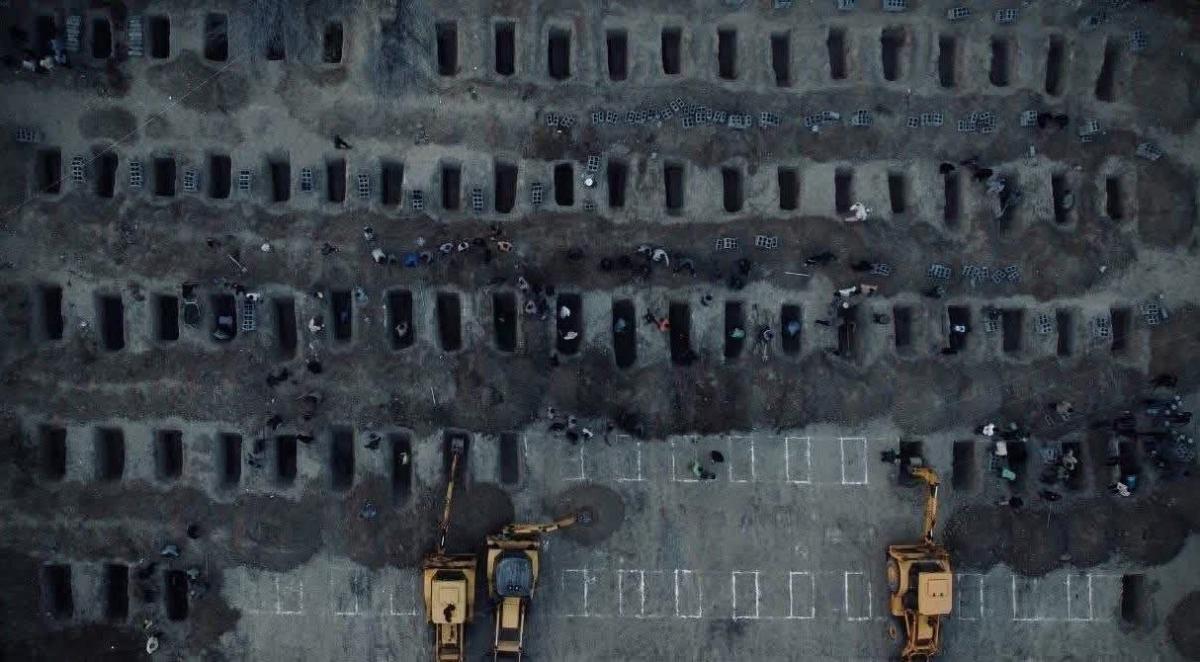
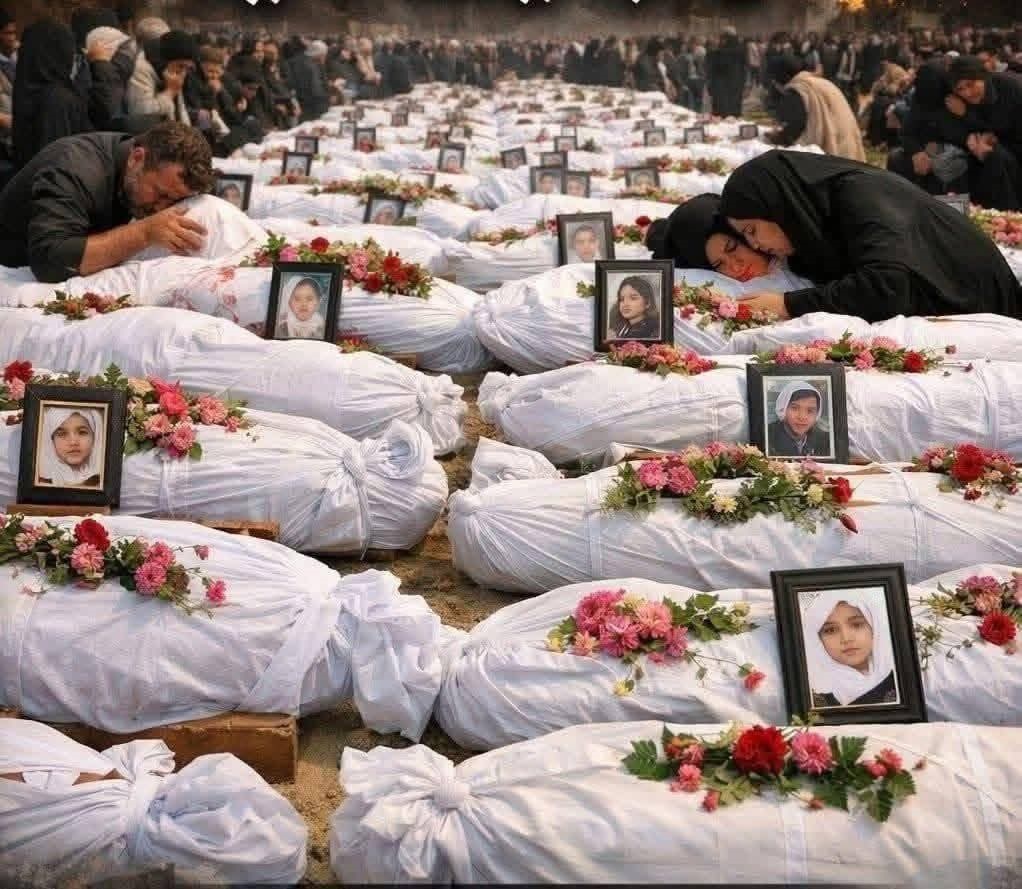
The attack against Iran, on the last day of February, was swift and targeted. The US and Israel killed hundreds of civilians (including 150 schoolgirls within the first hour), but also the Supreme Leader of Iran and several senior military leaders. Those who had assumed that the Iranians would be cautious because of the US-Israel announcement that it would strike Iran and that it would seek to assassinate its leader were disappointed; it appears as if the Supreme Leader did not want to go into hiding but wanted to be martyred at his desk, which is exactly what happened. A red banner is now flying from the dome of the Jamkaran Mosque in Qom, which is a symbol that pledges revenge against the assassination of the Supreme Leader – a direct message to Shias across the world. The death of Khamenei is not the end of the Islamic Republic, but it opens a new phase in the struggle against US-Israeli interventions.
However, it is worth saying that the Israeli-US assault on Iran is part of a setback faced by national liberation forces across West Asia – the genocide against the Palestinians, the weakened situation of Hezbollah (with the assassination of Sayyed Hassan Nasrallah), the delivery of the presidency of Syria to the former al-Qaeda leader Ahmad al-Sharah, and the inertness of the Arab states against the genocide and other crimes being committed in the region. The attack on Iran, both in 2025 against the nuclear energy sites and in 2026 against the leadership of the republic, sowed chaos into a region that had begun to settle differences (for instance with the trilateral meeting process between China, Iran, and Saudi Arabia that began in Beijing in 2023 but then continued in November 2024 in Riyadh and in December 2025 in Tehran). Rather than incubate peace and therefore development in the region, the United States and Israel used military campaigns to destabilise West Asia.
THE TRUMP REGIME’S VISION
In February 2026, US Secretary of State Marco Rubio went to the Munich Security Conference, where he laid out a vision for the world that comes from Washington. Rubio spoke of the need to establish the Second Age of Colombus, but then explained clearly the enemy that had dented the hegemony of Western Civilisation:
The great Western empires had entered into terminal decline, accelerated by godless communist revolutions and by anti-colonial uprisings that would transform the world and drape the red hammer and sickle across vast swaths of the map in the years to come.
Rubio brought together two of the major enemies of the imperialist forces, the ‘godless communist revolutions’ (now in countries such as China and Cuba, for instance) and the ‘anti-colonial uprisings’ (now in places such as Iran and Venezuela). These two dynamics are the two sources of the new mood in the Global South. The imperialists are clear about their enemies, and for them these countries are enemies because they demand sovereignty over their territories, they defy the United States and its hyper-imperialist ambitions, and they fear the contagion of this defiance around sovereignty. They do not exactly care if this sovereignty is exercised in a socialist or in a theocratic direction. What they care about is sovereignty, defiance, and its contagion.
What the Trump mafia wants is submission of the Global South, to disrupt the emergence of the new mood and to destroy its institutions. Trump has made it one of his core ambitions to smash the BRICS+ emergence, and its reduction of the use of the US dollar in international trade. ‘The idea that the BRICS countries are trying to move away from the Dollar, while we stand by and watch, is OVER’, wrote Trump on 1 December 2024. In early January, Trump reiterated the point: ‘We are going to require a commitment from these seemingly hostile countries that they will neither create a new BRICS currency nor back any other currency to replace the mighty US dollar…. or they will face 100% tariffs’. Aware that the US has lost total control over raw materials, science and technology, and finance, and aware that the US and its allies cannot reassert dominance over the world economy through normal commercial practices, the US under the Trump mafia has sought to use its extraordinary hyper-imperialist military power to try and subdue all the Global South countries and to destroy any and all working-class and peasant organisations and socialist formations.
The Trump mafia used both its capacity to bomb any country – demonstrated to great effect against the Palestinians in Gaza – alongside tariffs to bludgeon countries into submission. The tariff policy was not about economics or trade, but it was a weapon just like a GBU-57A/B MOP ‘bunker buster’ bomb. It was designed to disrupt the institutionalisation of the new mood in the Global South, particularly the South-South trade networks that have been growing since the Third Great Depression set in during the credit crisis of 2008 (in 2005, only 15% of total global trade was South-South trade, while this rose to 24% in 2023).
The heart of this campaign, which began under US President Barack Obama, was to try and halt the advances made by China in its development and to prevent China from growing as the leading trading partner of many Global South countries (of the 130 countries in the Global South, China is the leading partner of 63 – up from 36 in 2013). The US-led campaign against Huawei, one of the leading Chinese tech companies, began in 2018 and continued through the next five years; it sought to curb the Chinese company’s influence in global 5G networks by citing espionage threats and by preventing it access to advanced semiconductors.
Over the past decade, across Democratic and Republican administrations, the US has increasingly portrayed Russia and China as near-peer rivals not just in military terms but across the full spectrum of information warfare, economic coercion, and narrative control, treating influence itself as a battlespace. Washington continues to accuse both states of conducting coordinated disinformation campaigns, cyber operations, election interference, and media influence designed to erode trust in Global North institutions. This framework has justified an expansion of US information operations, strategic communications, and hybrid warfare tools, blurring the line between peacetime competition and conflict, and positioning control over data, technology, finance, and global narratives as just as decisive as tanks or missiles in a long-term struggle against Russia and China as systemic challengers to US power.
CHINA, RUSSIA, AND THE WEAKENED BRICS+
That attack against Russia and China by the Global North was not only against these countries, but against the new mood in the Global South and its institutions – whether the BRICS+, the Shanghai Cooperation Organisation, or the Forum on Africa-China Cooperation.
During the weeks and then months of the Israeli genocide against the Palestinians, many people in the world began to feel demoralised that none of the major countries in the Global South could stop the genocide. It was heartening when South Africa took Israel to the International Court of Justice for the crime of genocide, but that was not powerful enough to stop the bombing of Gaza. Then, strikingly, the feeling emerged: why couldn’t the Global South, particularly Russia and China, protect Venezuela or provide fuel to Cuba, or prevent the attack on Iran?
Statements on these attacks that came from the chancelleries of the Global South did not dither. The Mexican government, for instance, declared that US actions in Venezuela were ‘in clear violation’ of the UN Charter and urged the United States to de-escalate tensions and facilitate peaceful dialogue. Brazil’s president Luiz Inácio Lula da Silva condemned the strikes on Iran and emphasised the need for all parties to respect international law, restraint, and civilian protection. With the US-Israeli attack on Iran, Russia called the strikes ‘a pre-planned and unprovoked act of armed aggression against a sovereign and independent UN member state’. China said that the killing of the Supreme Leader and the strikes in general were ‘unacceptable’ and a serious violation of Iran’s sovereignty and security. But there was no mobilisation of the institutions of the new mood in the Global South to pressurise the hyper-imperialist bloc to cease their operations, and there was no use of the UN Security Council seats to place resolutions in the chamber and increase diplomatic and political pressure on the US and its allies in the hyper-imperialist bloc.
Pressure from socialist forces and from the working-class and peasantry is necessary to shift the class struggle in the world to our advantage. US-led hyper-imperialism wants to use its military advantage to reshape the world for a Second Age of Columbus. This must be confronted to save the planet for humanity.
The girls did not go home from school. They were placed in their graves.
Imperialism is a philosophy of death.
‘I
know a sad little fairy
who lives in an ocean
and plays her heart out softly, softly
on a pennywhistle
a sad little fairy
who dies with a kiss at night
and is born with a kiss at dawn’.
(From Another Birth by Forough Farrokhzad).