Making Passenger Aircraft in India: Self-Reliance in Reverse Gear
Raghu
MANUFACTURING in the aviation sector is going through quite a boom in India, in both military and civil aircraft. In military aircraft, there has of late been a pronounced emphasis on manufacturing indigenously designed and developed platforms. After decades of sharp preference for foreign equipment and doubts about domestic public sector manufacturers, the armed forces appear to have finally decided to put their weight behind self-reliance out of a practical need to reduce external dependence, especially during times of conflict.
A recent article in these columns (PD Feb 1, 2026) had therefore expressed surprise and disappointment that in the deal to acquire 114 Rafale fighters from Dassault, the French major is apparently going to set up its own assembly line in India, probably with some Indian partner, to produce the bulk of the fighters after the initial block of 18 aircraft supplied directly from France. Such an arrangement, even if it involves Indian partners in Rafale assembly, and even if a fairly high percentage of parts are sourced domestically, would not involve substantial technology transfer and acquisition of know-how by India towards genuine self-reliance. A relatively inexperienced Indian private sector partner would imply Dassault maintaining its control over vital technologies, with the Indian partner unable to absorb know-how for the next cycle of innovation.
One rationalization being advanced is that Hindustan Aeronautics Limited (HAL), the aeronautical defence PSU with over eight decades of experience with multiple platforms, is over-stretched and struggling to fulfill even current orders for the indigenous Tejas from the Indian Air Force (IAF). Merits of this argument may be discussed, as well as potential for HAL opening new assembly lines elsewhere, and setting up diversified supply lines. However, there is reason for disquiet, since there are strong rumours that HAL is not being considered as a development and production partner with DRDO for the 5th generation Advanced Medium Combat Aircraft (AMCA) based on that rationale, but with an added desire to push an underprepared Indian private sector to the forefront of military aircraft manufacturing. These are not good signals for self-reliance.
Even if the Rafale case is considered an exception, in passenger aircraft foreign OEM setting up assembly lines in India, albeit with Indian partners, seem to be settling into a steady pattern. In the process, important opportunities for indigenous design and development of passenger aircraft are receiving less attention, and even risk being sidelined. Perhaps decision-makers in the political leadership and bureaucracy do not see the same strategic imperative for self-reliance in passenger aircraft as in military platforms. Perhaps they also believe, as explicitly stated by several government spokespersons, that this will bring in the private sector in a big way and enlarge the aviation and advanced technology industrial base through ‘Make in India’ and boosting ‘atmanirbhar bharat’ (self-reliant India). This is a fundamental misunderstanding of the nature of technology, especially advanced technologies, and how self-reliance or indigenous know-how must be acquired.
POTENTIAL NEW PASSENGER AIRCRAFT IN INDIA
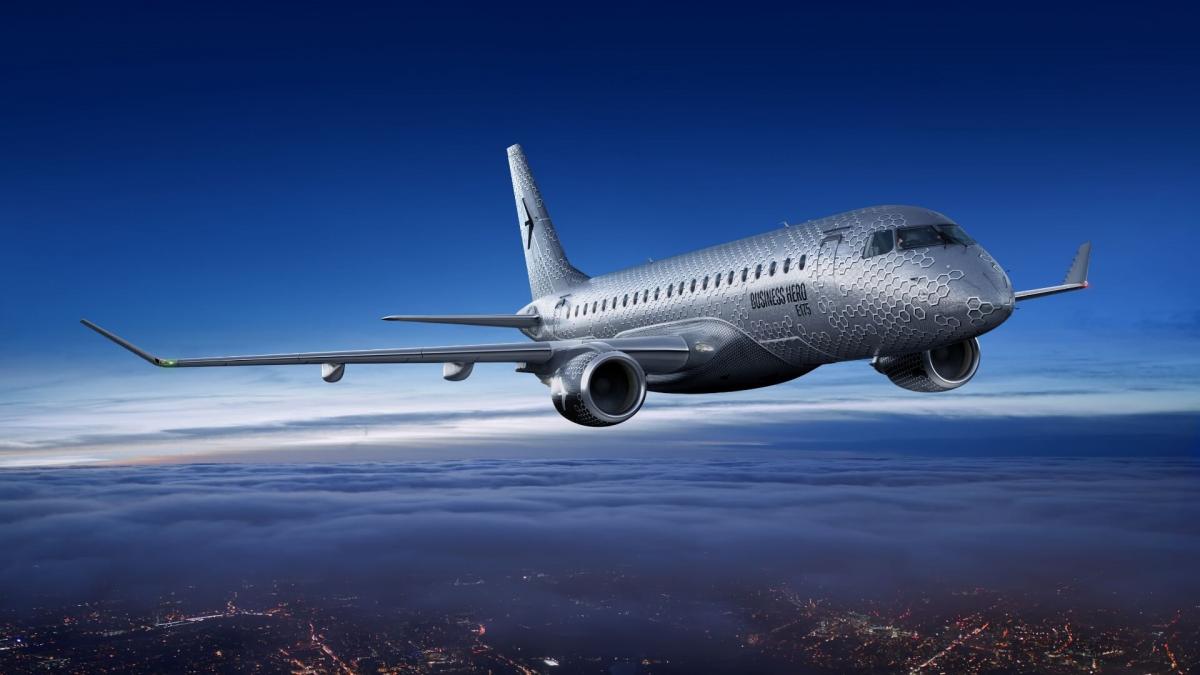
The big splashy entrance in this scenario was made by the MoU signed in late January this year between Brazilian aircraft major Embraer, the third largest in the world after Boeing and Airbus, and Adani Defence and Aerospace to set up an integrated aircraft manufacturing, components and MRO (maintenance, repair and overhaul) ecosystem in India as well as a final assembly line (FAL) for regional transport aircraft, aiming at both the Indian and wider export markets. It is expected that further announcements would be made in a few days when Brazil’s President Lula visits India accompanied by a large delegation of private sector CEOs and government leaders. Currently, Embraer makes its regional aircraft only in Brazil and appears o be keen on expanding its production base and exports. This venture would mark not only Embraer’s first plant outside Brazil, but also Adani’s maiden foray into passenger aircraft.
Many years ago, Embraer had made a very clever, strategic choice to position its family of Brazil-designed and manufactured aircraft in the medium-capacity segment of 50-120 seater short-to-medium haul passenger aircraft operating mostly on regional routes. This places the Embraer family of jets below the larger 150-seat single-aisle narrow-body passenger carriers in which Boeing and Airbus have a virtual duopoly in a roughly 90% market share between them, with only a small overlap area between some smaller Airbus and larger Embraer variants. This has enabled Embraer to carve out a significant niche for its aircraft, emerging as a major global player in the regional air transport segment.
In India, the significance of this entry lies in the rapid growth of passenger air traffic, and especially of regional air transport, estimated to be growing at over 7% annually. Boeing and Airbus estimate a requirement of 2000-3000 aircraft over the next decade from the current around 900 planes. Many of India’s leading airlines such as Indigo, Air India and others have placed large orders of close to 1500 aircraft in just the past 2-3 years with both Airbus and Boeing, but their order books are already full well into the next decade! Meanwhile, regional air traffic too is growing fast, at least between metro hubs and major Tier-1 and Tier-2 Cities, encouraged by substantial government support and subsidies. Many of these routes require smaller aircraft not available from Boeing or Airbus. Around 500 regional aircraft are estimated to be required over the next 10 years. There has always been a strong potential for domestically manufactured aircraft to cater to this large and growing market, and major players are now eyeing it.
Embraer-Adani will have a clear early-entrant advantage with its pre-existing models and could begin to roll out passenger aircraft in India in a few years. They have not announced the exact models they will assemble in India, but the Embraer website speaks of aircraft with 70-146 passenger capacity. Embraer has several proven models in this range such as the best-selling E-175 (76-88 cap), E-190 E2 (114 cap) and even smaller jets of 50 passenger capacity. The new Indian regional carrier Star Air already operates an all-Embraer fleet on regional routes.
OTHER CANDIDATES
Other manufacturers too are waiting to enter the regional air transport market with new passenger aircraft in this capacity bracket.
Tata Advanced Systems Ltd (TASL) is already setting up a full assembly line (FAL) for the C-295 military transport aircraft from Airbus which won the tender for this 56 aircraft deal involving 16 off-shelf aircraft from Airbus Spain and 40 to be assembled in Vadodara with gradually increasing indigenization up to 75 per cent and an ecosystem of suppliers of components and sub-assemblies. Deliveries are scheduled to begin in September 2026. Tatas are already planning to make civilian transporters and passenger versions of the C-295, with government encouragement, for both domestic and export markets. The transition is not difficult. Readers may be reminded that the C-295 replaces the venerable but ageing Avro/HS-748 military transport aircraft and its civilian transport and passenger versions made in India under license by HAL at its Kanpur facility. The HS-748 saw service with the IAF and the erstwhile Indian Airlines for over two decades between the 1960s and 80s.Tatas is surely hoping its sister company Air India may be among its early buyers.
Embraer is also collaborating with Mahindra Aerospace to make the C-390 military transport aircraft in India in response to the impending tender for a heavier class of Medium Transport Aircraft (18-30 tons) expected to be issued later this year. Again, a civilian version is also planned.
HAL itself, probably weary of waiting for government sanction for the envisaged indigenous Regional Transport Aircraft (RTA) as discussed below, and anxious about the potential early-entrant advantage of Embraer and others, has also signed an agreement to manufacture the commercially in-service Russian Sukhoi SJ-100 Superjet in India and enter the market soon, even though the project is riddled with risks and problematic issues.
INDIGENOUS NAL-HAL RTA
Then there is the long-delayed RTA designed and developed by the National Aeronautical Laboratory under the CSIR with production to be undertaken by its Bengaluru neighbour HAL. The project is languishing for lack of support and serious government backing, despite its promise of fully indigenous design and development, an exemplar of self-reliance in commercial passenger aircraft. As a result, the project now faces threats from assembly lines set up in India by foreign OEMs based on pre-existing or easily adaptable products seeking to fill the vacuum.
With laudable foresight, the Project was initiated way back in 2007 by NAL and HAL with a design for a 70-seater turbo-prop regional airliner to compete with the Leonardo-Airbus ATR-72 which had at that time entered India at the end of the previous millennium and played a pioneering role in the then nascent regional air passenger traffic. In typical bureaucratic fashion, which has been the bane of many industrial research and development projects in India, including in defence and certainly in aviation, the Project went through a series of variations in concept, project definition, approvals at different levels in different ministries and so on. It took till 2021 for NAL to finally get “in principle” permission, but finances were not yet in place. In 2024, Government said it would form a Special Purpose Vehicle (SPV) to steer the project and it was reported in the beginning of this year that a total of about Rs.12,000 crore would be made available for design-development, prototypes, testing and certification of a 90-seater RTA-90. It is still an open-question whether the aircraft would be a turbo-prop or a jet with high fuel-efficiencies and low carbon footprint, and whether it would be based on earlier designs or a “clean-sheet” design.
Despite the likely competition in the domestic regional passenger aircraft market, the NAL-HAL RTA could make a major impact both in India and in other parts of the world. The project would contribute significantly to development of indigenous know-how in commercial passenger aircraft, and also catalyze a vigorous innovation and manufacturing eco-system, as has happened with the Tejas Light Combat Aircraft.
NAL and HAL are currently pleading with government for a clear green signal and backing.
Meanwhile the pressure in the regional passenger aviation sector is building, foreign OEMs with powerful and influential Indian partners are preparing to rapidly roll out aircraft, promising high indigenization and domestic supply chains in manufacturing, and claiming alignment with the ‘Make in india’ goal. These companies are also making loud comments about linkage with the Regional Transport Aircraft programme, angling for a slice of the SPV funds. All this may be fine, but ‘atmanirbhar’ it is not.


