Azhar Moideen
EVEN as the brouhaha over the dramatic appearance of Mamata Banerjee to argue her petition against the Special Intensive Revision (SIR) of electoral rolls in West Bengal by the Election Commission of India (ECI) dies down, Mostari Banu is tidying her files and preparing for another round of hearings in the Supreme Court.
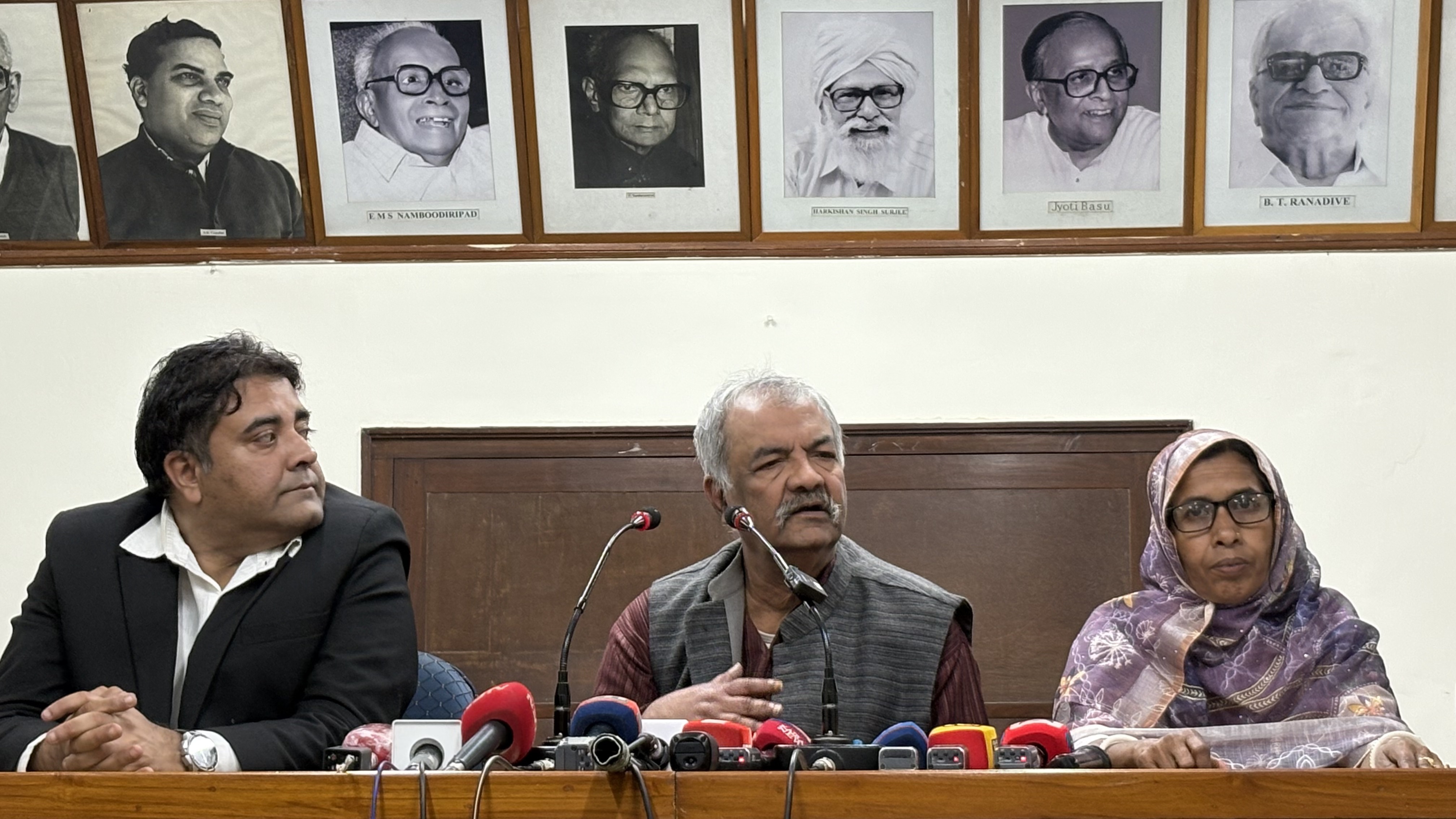
A 44-year-old homemaker hailing from Bhagwangola in Murshidabad, Mostari Banu, who is the original petitioner in the case before the Supreme Court that is now titled ‘Mostari Banu vs The Election Commission of India’, addressed the press at AK Gopalan Bhawan, the headquarters of the Communist Party of India (Marxist) in New Delhi, on Monday. Her account of how the revision of electoral rolls is causing immense suffering to the people of her state was far removed from the political theatre that was played out in front of the media a few days earlier.
“The Election Commission said that no one whose name is on the 2002 list would be deleted,” she said. “My name is in it, yet they summoned me for a hearing, saying that their records show that my parents are only 15 years older than me. Even disabled people are made to come for hearings.” The discrepancy that Banu referred to, which the ECI has chosen to call “logical inconsistency,” has upturned the lives of thousands of people in West Bengal, including, most famously, the economist and Nobel Laureate Amartya Sen.
Opening the press meet, CPI(M) Polit Bureau member Nilotpal Basu traced the origins of the controversy surrounding the SIR exercise, which was initiated by the ECI in Bihar and later expanded to multiple other states. Basu pointed out that the CPI(M) had opposed the SIR from the very beginning and objected to the concept, design, and implementation of the exercise. While conceding that ensuring the legitimacy of voters in the electoral roll is important and that periodic revisions are necessary for the same, he underscored that the ECI, however, appeared to be encroaching into areas outside the domain that it is constitutionally mandated to follow.
The legal challenge that was initiated by the petition filed by Banu and backed by the CPI(M) centres around the attempt by the ECI to determine citizenship and demands that the deployment of enumeration forms and the linking of names to the 2002 rolls be stricken down. Advocate Sabyasachi Chatterjee, who is representing Banu in the case, explained that the primary prayer before the Supreme Court is to have the SIR process declared unconstitutional.
Additionally, the petition seeks transparency in the objection process, including disclosure of objections, replies, decisions, and the identities of the objectors. Showing sample notices, Chatterjee pointed out that in many cases, the names of objectors were blank or marked X, and their addresses vaguely described, making it impossible for voters to know who had challenged their inclusion. Electoral law, he explained, requires proper identification and the presence of the objector at hearings.
Mostari Banu filed the original petition challenging the ECI’s controversial directive in November 2025, when specific features of the revision first became visible on the ground, including the mandatory requirement of filling enumeration forms and attaching photographs as per public hearings that were held. While that requirement was declared not mandatory by the Chief Electoral Officer in West Bengal mere hours before her petition’s first scheduled hearing, Banu anticipated that the entire process would involve harassment and misery for lakhs of voters like her, especially in Muslim-dominated areas.
She was not wrong. The ECI has called lakhs of voters to hearings by invoking discrepancies like “logical inconsistencies” without explanation, leaving them confused as to what exactly was wrong with their records. Basu pointed out that some forms mentioned “relatives” for linkage purposes without specifying which relative, creating further uncertainty. Furthermore, the arbitrary use of artificial intelligence for the creation of a “so-called list of suspect voters” is leading to a lot of harassment, he said. “The poor, minorities and other vulnerable sections are being forced to forgo their daily work and face a second phase of hearings; there is a real threat that a large number of voters will be deleted from the list,” he added.
While hearing Banu’s petition, the Supreme Court directed that statutory requirements must be followed and that future notices should clearly mention the names and details of objectors. While welcoming the directive, Chatterjee called it partial relief and cautioned that the SIR should not become parallel to the National Register of Citizens (NRC) or evolve into a data-collection exercise that could later be used against individuals. Such a development, he warned, could raise constitutional concerns, including under Article 21. Chatterjee questioned the Trinamul Congress government’s commitment to opposing the SIR, despite the Chief Minister’s showmanship. “They have come to the court only now,” he noted. “They have still not filed an affidavit in our case despite being a respondent.”
Banu, who holds a postgraduate degree in history and a BEd qualification, and had cleared the School Service Commission examination many years back, could not, however, pursue her dream of becoming a teacher when recruitment controversies and subsequent exam freezes in West Bengal blocked her path. Her husband, Kamal Hossein, is a former panchayat samiti member and District Secretary of the CPI(M)-affiliated migrant workers’ union in Murshidabad. “Migrant workers who board a train for work in another state are receiving notices for the next day,” Banu told the media. “They rush back to sort it out, leave again, and a second notice arrives; it is a never-ending process of harassment.”
It is this process that she is now defiantly standing against. Despite the claims of the BJP and the Sangh Parivar that there are 1.5 to 2 crore “illegal voters” in West Bengal, only around 58 lakh deletions have been reported in the draft roll published by the Election Commission on December 16, out of which 24.16 lakh electors were identified as deceased and 32.65 lakh electors as shifted or absent. The fight against the attempted mass disenfranchisement continues.


