Samprikta Bose
West Bengal is currently witnessing an unprecedented state of turmoil centered on the special intensive revision (SIR) of electoral rolls. The hearing phase in the process has become a nightmare for ordinary citizens, especially those from marginalised sections of society. Arbitrary and unilateral decisions by the Election Commission (EC) are fundamentally undermining the democratic structure. Disturbingly, the names of deceased voters have allegedly remained on the lists for 12-13 years, with attempts to remove them being obstructed. The lists are also inflated with numerous “bogus, featureless” voters, leading to improbably high polling percentage in booths. The CPI(M) has consistently raised the following demands: The electoral rolls must be cleansed of deceased and fraudulent voters; no genuine voter should be omitted from the list; and authentic voters must be protected from any form of harassment.
But the SIR process, despite its supposed purpose of cleaning up the electoral rolls, is causing significant distress instead. Long-time voters, even those listed since 2002, are being repeatedly compelled to submit multiple documents and attend hearings. This has created tremendous difficulty for the elderly and caused acute peril for specific “targeted” marginalized sections. Furthermore, the process is facing explicit and alarming accusations of targeting religious minorities. In a sharply worded communication to the chief electoral office (CEO), CPI(M) West Bengal State Secretary Mohammed Salim condemned the administrative actions, asserting they constitute a deliberate strategy to frighten voters. Salim highlighted the “staggering” fact that highly respected individuals, including Nobel laureate Amartya Sen and former minister Kanti Ganguly, have been summoned for hearings despite their clear stature and long-established residency. He expressed “deep concern” that the state’s administrative resources are being turned into a weapon to selectively victimise religious minorities, the economically disadvantaged, migrant workers, and CPI(M) activists and supporters. This, he argued, is not a simple procedural error but a calculated abuse of power.
Salim further asserted that a clear double standard exists: while opposition figures and marginalised groups face constant, undue scrutiny, those connected with the BJP seem to enjoy total protection from similar checks. This obvious imbalance, he argued, erodes the fundamental principle of a “level-playing field”, which is central to the constitutional requirements.
BRUTAL SUPPRESSION
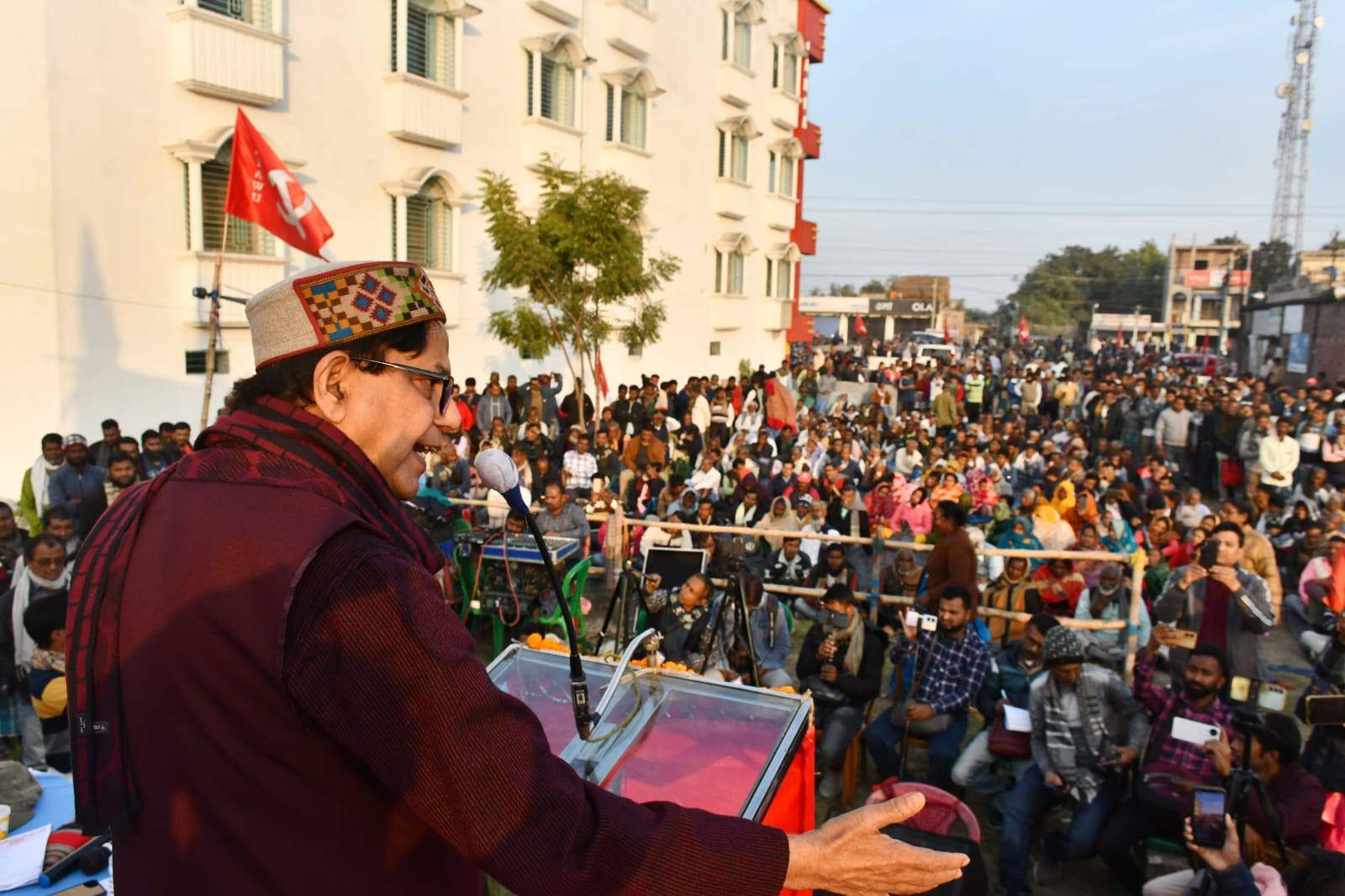
The CPI(M) has launched massive public protests across the state, particularly outside the offices of block development officers (BDOs), to highlight issues affecting vulnerable sections of society. These demonstrations are intended as a legitimate and democratic expression of dissent. However, in the state’s authoritarian environment, these protests have been met with brute coercion. There are escalating reports of brutal physical attacks by the Trinamool Congress (TMC) on protesting Left leaders and workers. A core question emerges: What motivated goons under the TMC’s control to attack a march or meeting specifically protesting the commission managed by the RSS-BJP? The prevailing view is that the habitually authoritarian TMC government actively suppresses the Left opposition, denying them any legitimate opportunity for protest or dissent within the state. This attitude suggests that while the ruling party reserves the right to organise meetings and processions, it will tolerate nothing that could disrupt the “manufactured” TMC-BJP political binary.
The police reaction has predictably followed the same pattern. They have reportedly ensured the safe exit of the attackers while, paradoxically, registering cases against the victims of the violence. This pattern has been observed across multiple locations, including Usthi in South 24 Parganas, Purbasthali in Purba Bardhaman, and Barasat in North 24 Parganas. Notably, in Purbasthali, the attack on a party meeting was allegedly led by the local minister himself.
CORE HARASSMENT REMAINS
The Supreme Court has intervened in the ongoing crisis by issuing a firm mandate to rein in the Election Commission’s excessive and arbitrary control. While allowing the contentious hearings to proceed, the court has significantly curtailed the commission’s highhanded actions by directing greater transparency and procedural fairness. These directions include the immediate disclosure and publication of the complete list of voters flagged for “data inconsistencies” as well as the mandatory issuance of acknowledgement receipts for all documents submitted by voters to prevent record misplacement. The court has also ordered the acceptance of secondary school admit cards as valid proof of birth, easing the burden on young voters. Further safeguards include permitting voters to be accompanied by their booth level agent (BLA-2) for assistance during complex hearings and substantially increasing the number of decentralised hearing centers to address concerns about accessibility in rural areas. Additionally, the court has made it clear that the state government alone is responsible for maintaining law and order throughout the SIR process. This explicit clarification aims to prevent political intimidation at hearing sites. However, despite this judicial intervention successfully limiting the commission’s dominance, the core problem of voter harassment during hearings remains largely unaddressed.
Salim welcomed the Supreme Court’s directions aimed at preventing harassment by the Election Commission during the SIR process. In a statement, he said the party thanked the Supreme Court for issuing directives after understanding the real difficulties faced by ordinary people, particularly those from marginalised sections, and asked whether the Election Commission would now refrain from acting like a “commission of persecution.” Salim said several issues still remain unresolved, and warned that if these are not addressed and if the court’s directions are not properly implemented on the ground, democratic protest would be the only path left to protect citizens’ voting rights.
He noted that measures such as displaying lists of “logical discrepancies” at gram panchayat, block and ward offices; allowing documents and objections to be submitted through authorised representatives such as booth level agents; accepting authority letters bearing signatures or thumb impressions; extending deadlines even after expiry; and ensuring adequate staffing, proper hearings and maintenance of law and order would provide significant relief to citizens, especially the elderly, the poor, daily wage workers and people living in marginal areas. He emphasised that preparing a transparent electoral roll is a fundamental prerequisite for conducting any election, particularly in view of the forthcoming West Bengal Assembly elections, and said the Election Commission must ensure that not a single citizen is deprived of their voting rights. According to Salim, the court has listened to people’s concerns and taken steps to protect their franchise.
However, he pointed out that several critical questions remain unresolved, including whether the Election Commission has the authority to adjudicate questions of citizenship at all, especially when Sections 16 and 19 of the Representation of the People Act, 1950 presume all electors to be Indian citizens unless proven otherwise; what clear legal basis exists for preparing lists under the undefined category of “logical discrepancy”; and whether an elector can be labelled “suspicious” merely because their parents have six children while verifying parental linkage. He further questioned whether, without any reference from a competent authority under the Immigration and Foreigners Act, 2025, the Election Commission or its officials can demand citizenship-related documents from an existing elector, thereby unlawfully shifting the burden of proof of citizenship onto the voter in violation of Article 326 of the Constitution and established legal principles.
Salim also raised concerns over whether discrepancies derived from administrative exercises or artificial intelligence technologies —without disclosure of data sources, standards, error rates or safeguards for human verification — can form the basis for affecting a fundamental right such as voting, and whether the nature and scope of the SIR process, extending beyond the limited exceptional powers under Section 21(3) of the Representation of the People Act, 1950, and involving coercive notices to existing electors on non-statutory grounds, can be considered legally valid without documented reasons of statutory necessity and proportionality. He concluded by saying that the party would closely monitor how the court’s directions are implemented in practice and reiterated that if these unresolved issues are not addressed in a fair and transparent manner, peaceful and democratic protest would remain the only means to safeguard citizens’ voting rights and their voice in democracy.


