Dr Kuldip Singh Tanwar
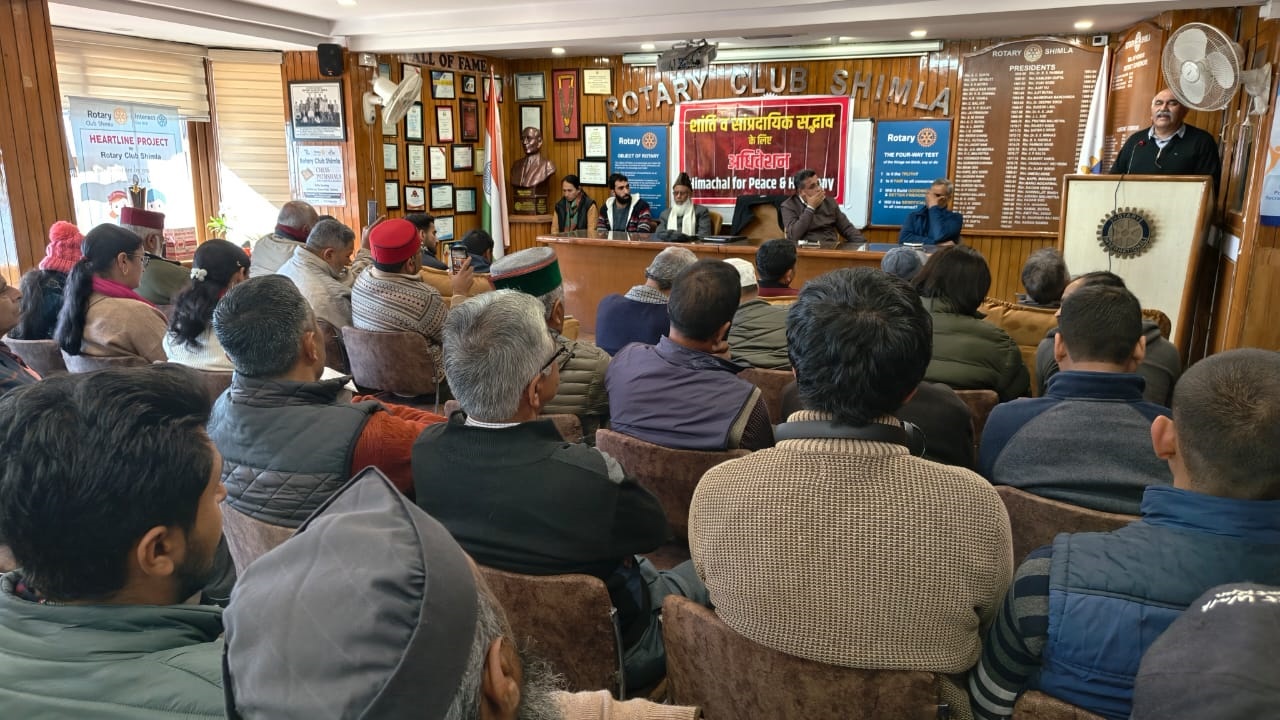
DOZENS of democratic and progressive organizations from Shimla city organized a meeting under the banner of the Himachal for Peace and Harmony Forum at Rotary Town Hall, Shimla, to strengthen peace and communal harmony in the state. During the seminar, the representatives took an oath to protect the country’s communal harmony, secularism, and the Constitution. The forum announced that a state-level convention for peace and harmony will be organized in Shimla on March 25, 2026. Before this, district-level forums will be formed in every district, and seminars will be held.
Kuldeep Tanwar, Rajkumar Jishtu, Maulana Mumtaz Ahmed Qasmi, Haji Saleem, Robin Sinha, Amar Chand Bhatia, Reenu Thakur, Khursheed Vani, Mahfooz Malik, Naved Alam, Tikender Panwar, Rakesh Singha, Dr. Onkar Shad, Sanjay Chauhan, Vijendra Mehra, Jagat Ram, Falma Chauhan, and many others attended the meeting.
In his address, the forum’s convenor, Kuldeep Singh Tanwar, expressed concern over recurring incidents promoting communalism in the state capital.
He stated that Himachal Pradesh has long been known across the country for its social standards in education, health, and employment. However, in recent times, communal forces have been continuously creating an atmosphere of tension in the state, which has not only damaged its reputation but also posed a serious threat to its tourism industry, one of its major economic pillars.
He added that the daily life of the capital and the state relies heavily on the minority community, which contributes through various occupations such as transportation, fruit and vegetable vending, tailoring, and other services. Communal tension affects their livelihood and disrupts the pace of the city.
The apple trade, the backbone of the state’s economy, has also been affected, as traders-mostly from the minority community-have stopped coming to purchase apples.
Dr. Tanwar said the state is already dealing with severe challenges such as natural disasters, an economic crisis, and the growing menace of drug abuse. At such a time, communal tension could prove fatal for Himachal Pradesh.
He called for a firm stand against the communal forces challenging the Constitution and appealed to the citizens of Shimla and the state to strengthen peace, brotherhood, tranquility, and communal harmony.
Former MLA Rakesh Singha said the people of Himachal have always upheld constitutional and democratic values. Secularism is enshrined in the Preamble of the Constitution, which guarantees equality to all religions. The Constitution does not discriminate on the basis of religion, caste, region, or race. However, communal forces repeatedly attempt to create situations leading to racial violence. People’s unity is essential to counter such conspiracies.
Former Deputy Mayor of Shimla Municipal Corporation, Tikender Panwar, said the state has been an example of brotherhood, peace, communal harmony, and unity. However, recent communal incidents have tarnished Himachal Pradesh’s image at the national and international levels. These events have caused a rift in the unity of the people and weakened peace and order. He appealed to people to safeguard human values and rebuild brotherhood in the state.
Representatives from minority community organisations urged the public to maintain unity so that peace and communal harmony can be preserved in the future.
Representatives of all participating organisations took an oath to work for the unity and integrity of the country-above religion, caste, region, gender, and race-to uphold mutual brotherhood, peace, and tranquility, and to protect democratic and secular values.
Speakers highlighted a growing concern: a single, dominant narrative is being pushed through many media and communication channels, shaping public perception and deepening communal divides. This unchallenged narrative influences communities, fuels fear, and normalizes prejudice.
To counter this, participants stressed the urgent need for a strong alternative secular, democratic, and constitutional narrative-one that promotes peace, critical thinking, and scientific temper rather than hate and polarization.
They emphasized that scientific, secular, cultural, social and democratic organizations must play a leading role in this effort. Their participation is essential in restoring rational dialogue, rebuilding social trust, and ensuring that the values of the Constitution reach every section of society.


